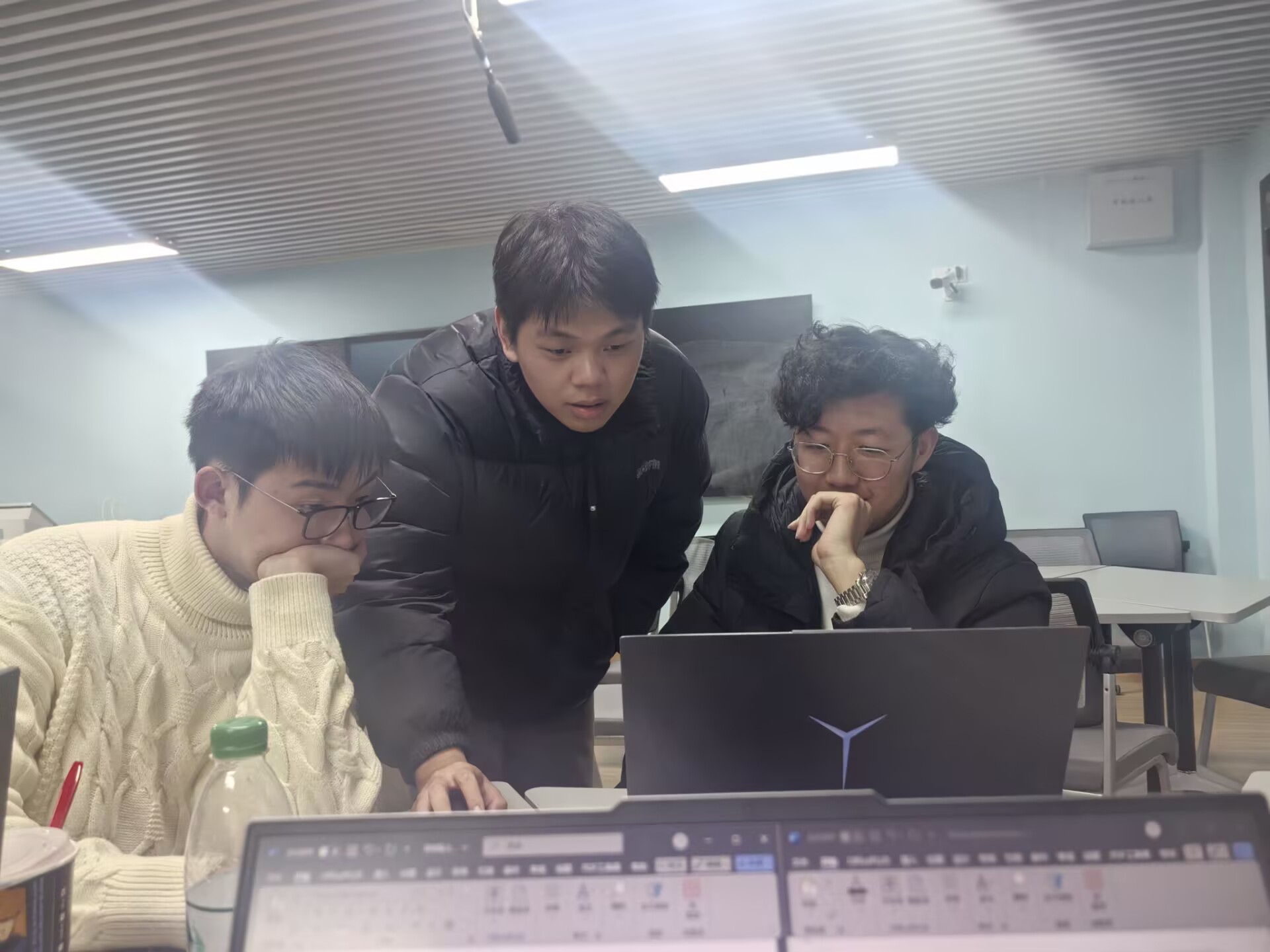
From a first agent-development class to debugging workflows and training models together, January 7–14, 2025 brought an intensive period of learning and collaboration around smart ships.
Zixuan Xu and Zhuo Li from Hubei University's School of Art and Design shared presentation and UI design techniques to improve project demonstrations.
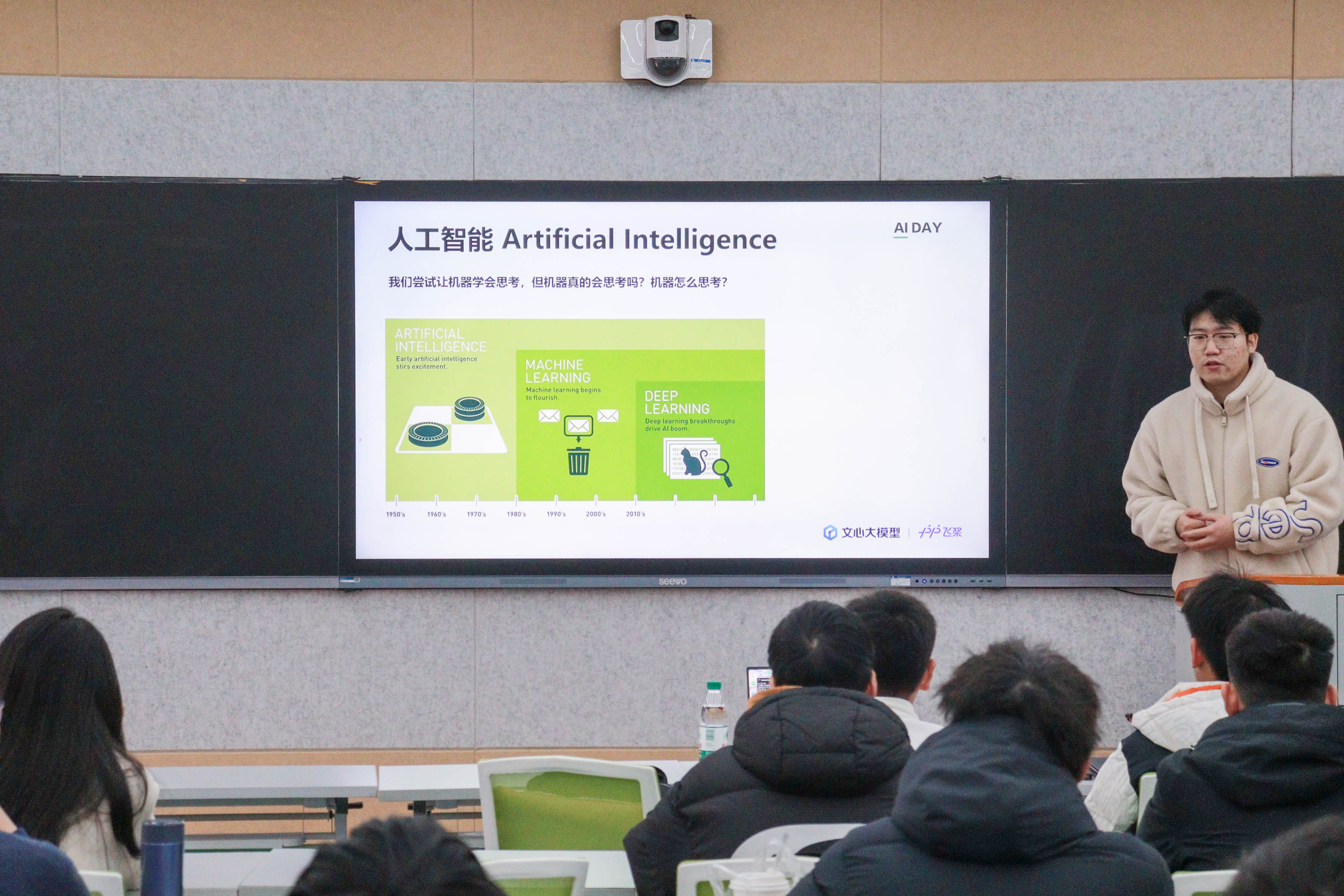
Introduction to deep learning
Luokun He, PaddlePaddle group leader and president of the Climber Robot Soccer Association at Wuhan University of Science and Technology, introduced deep learning models.
Fig. 02
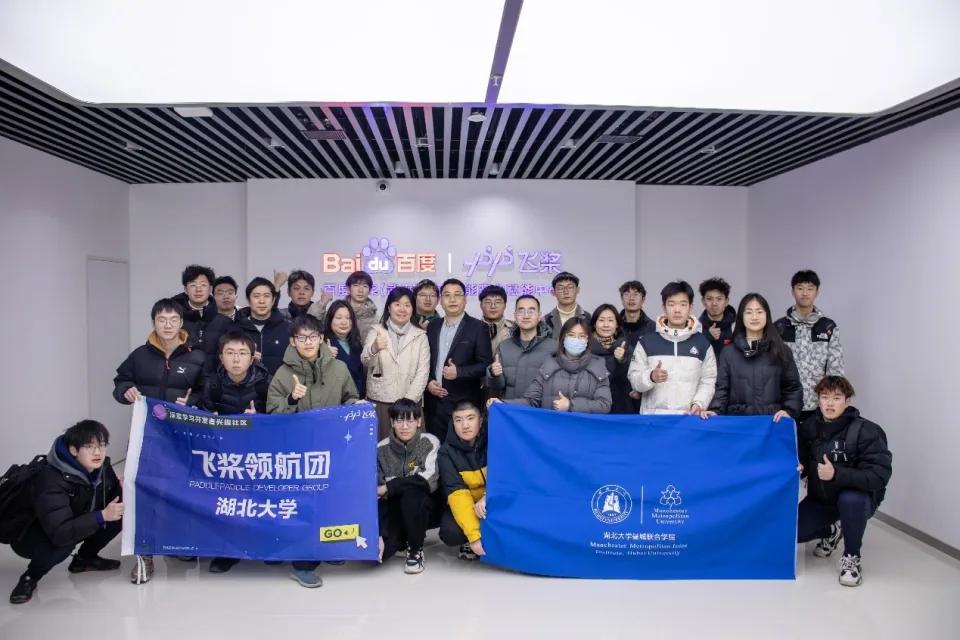
Industry visit · January 9, 2025 Image source: Manchester Metropolitan Joint Institute report
BUILD & PRESENT
Five directions. From problem to prototype.
A shared maritime theme opened different routes into LLMs, computer vision and machine learning.
01
Agents · Seabrain navigation agent team
Ship Navigation Assistant
An assistant for navigation conditions, crew wellbeing and equipment questions. Starting with prompts, the team combined maritime knowledge, plugins and workflows into an interactive prototype.
Camp lead: Zhenxin Lin · Team lead: Zixuan Liu · Presenter: Xuan Zhao
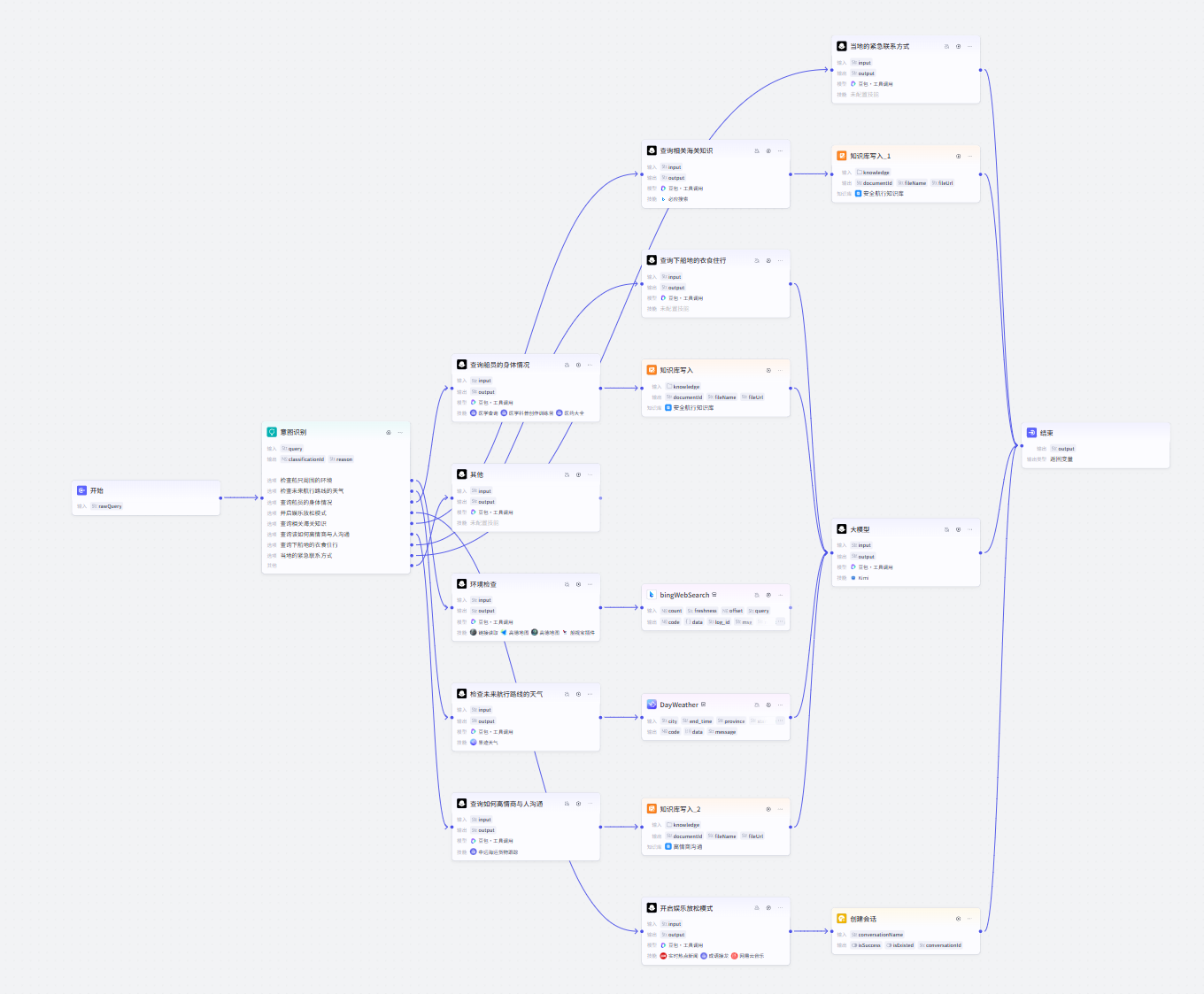
One entry point for different navigation questions
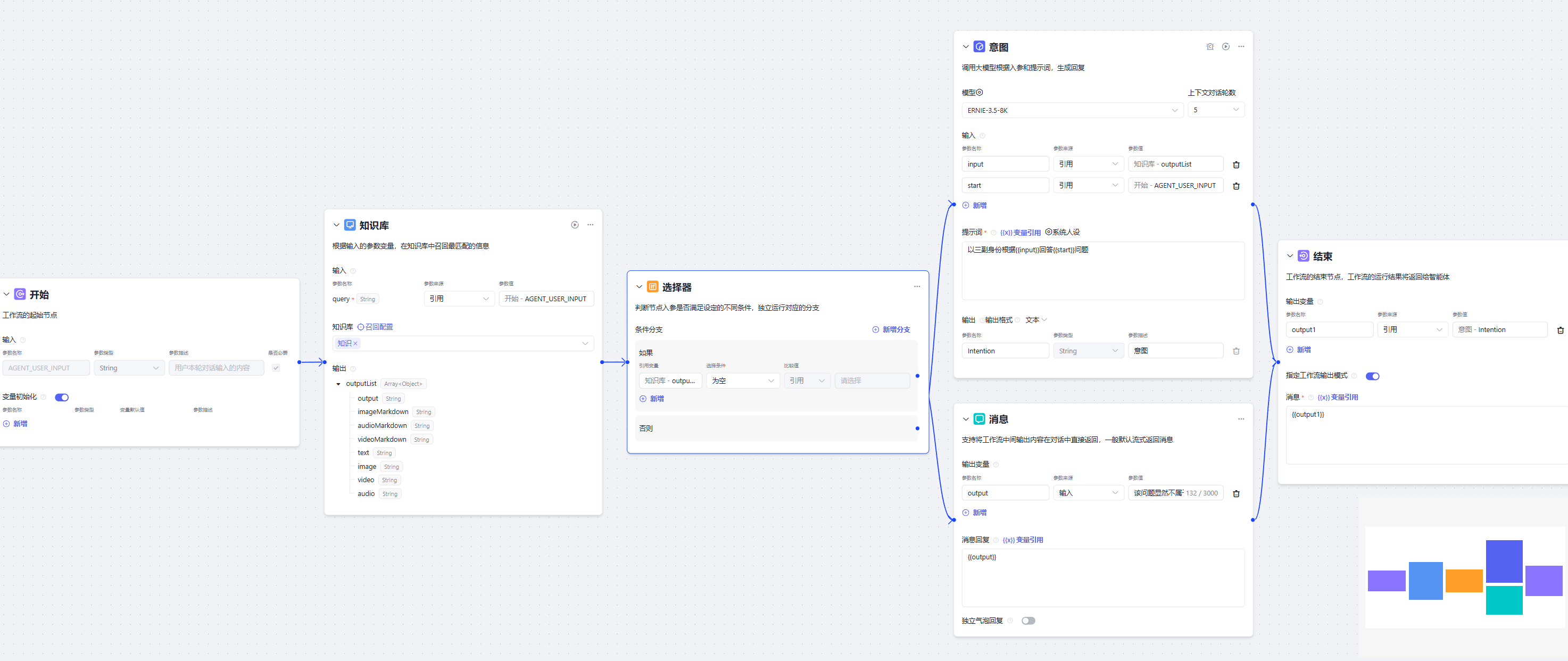
Identify the user's information need, then call the relevant tool or knowledge base. Navigation queries and crew communication tasks share one workflow.
Prompting
Co-STAR framework
Knowledge organization
Maritime references and crew-related knowledge
Interaction
Natural-language questions and branching workflows
Development process & more views +
Define the assistant's role
Define service scenarios around complex marine conditions, crew physical and mental wellbeing, and equipment faults.
Design the prompts
Organize role instructions around Context, Objective, Style, Tone, Audience and Response to clarify the goal and form of each answer.
Prepare knowledge bases & plugins
Collect safe-navigation, crew-life and resource-management references, connect existing plugins and explore custom tools.
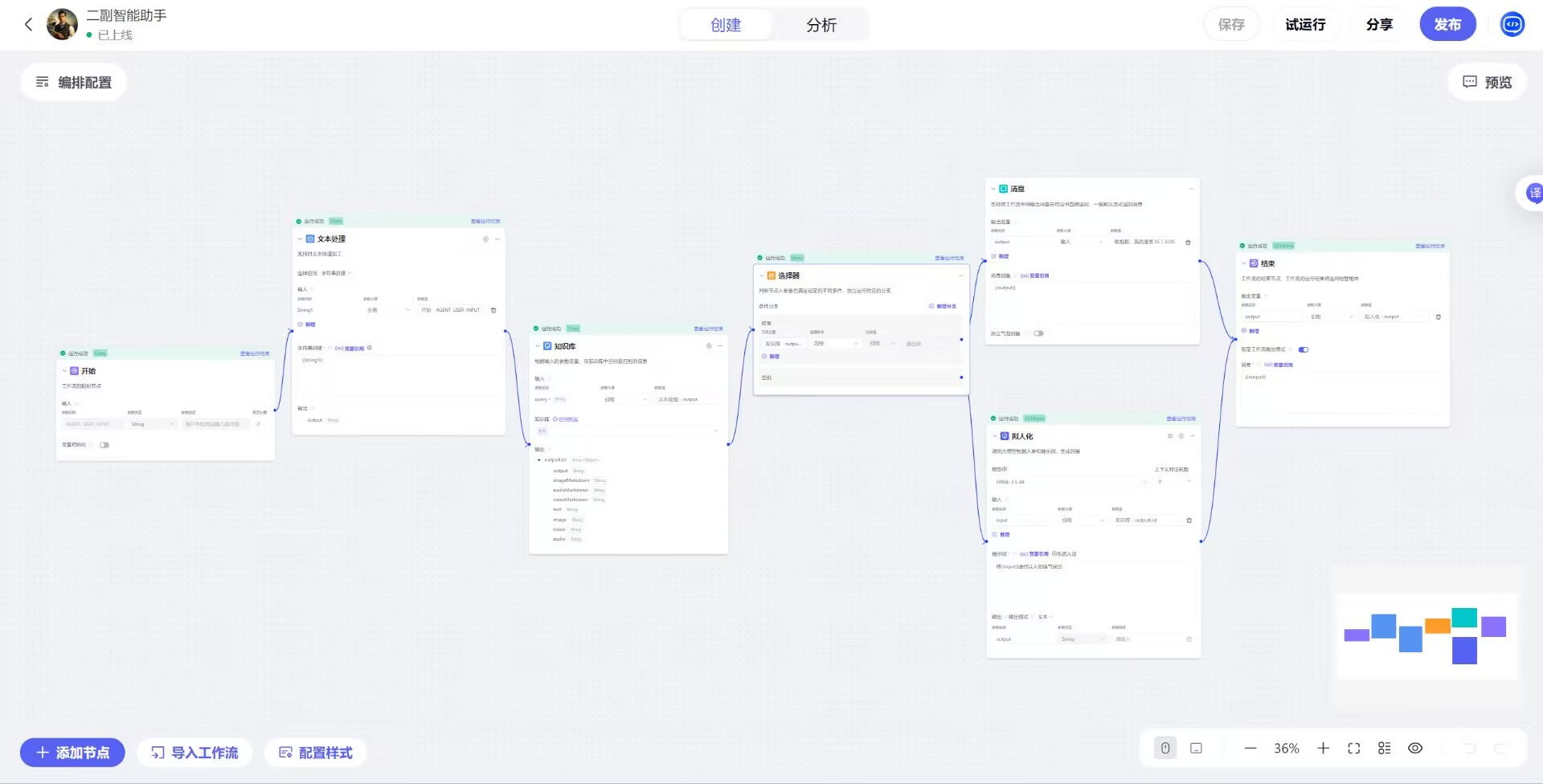
Build and debug the workflow
Connect intent recognition, retrieval, tool calls and responses, then test and adjust using different questions.
Final demonstration
The presentation showed weather and sea-condition queries, equipment Q&A, and the knowledge bases and workflows behind them. Technical upgrades, market expansion and international cooperation were future directions.
02
Agents · Chief Mate Agent
Chief Mate Agent
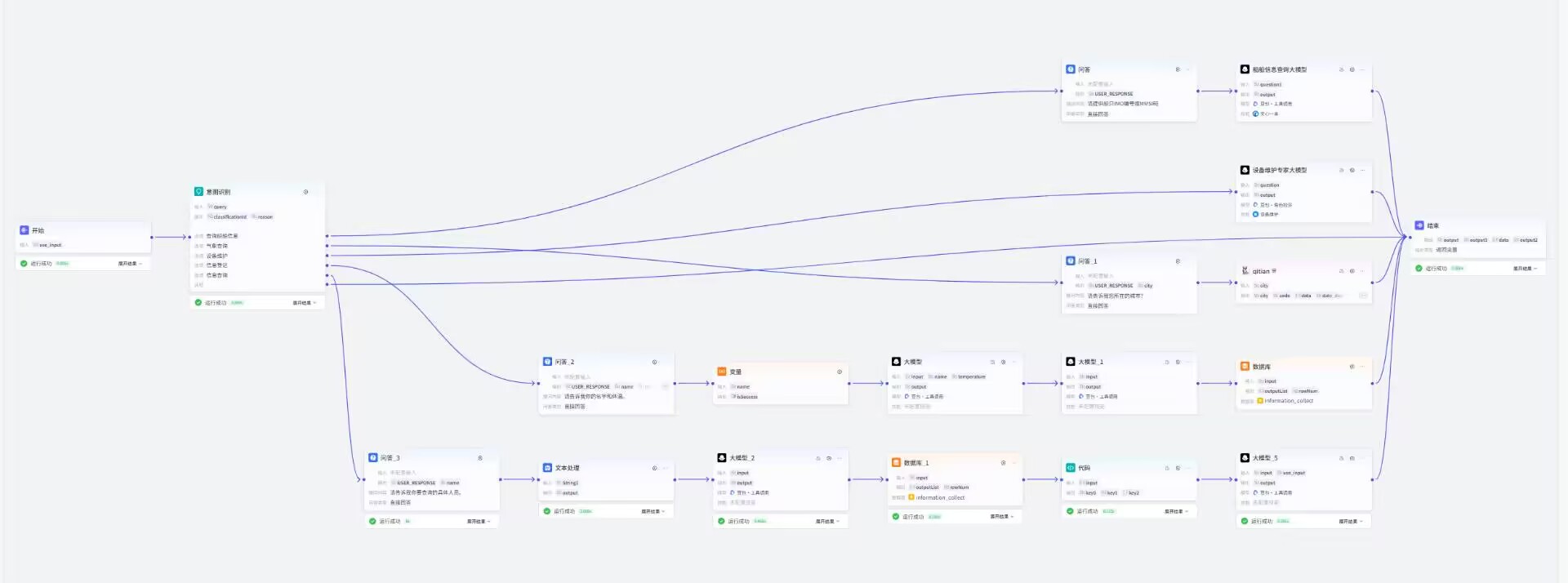
Starting with routine shipboard work, the team connected references, knowledge bases and tools. Separate chief, second and third mate workflows were tested through Q&A demonstrations.
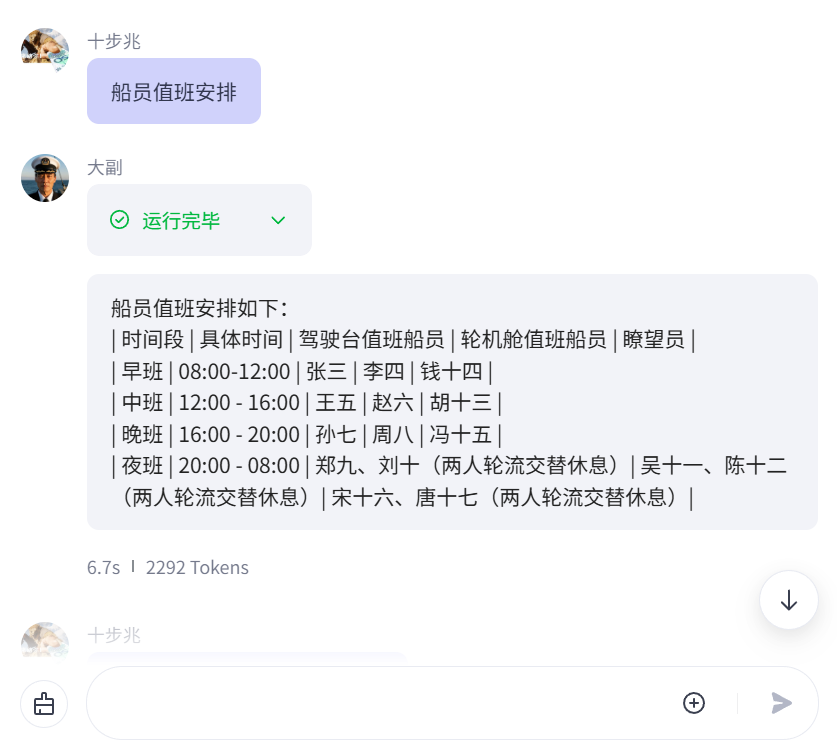
Duty-roster demo · Presentation, slide 14, with example personnel
From a question to a work schedule
Given a request for a crew duty roster, the prototype generates shifts, time slots and roles. The screenshot illustrates the camp prototype's response format.
Project reflection
The team noted incomplete references, limited data and slow responses, and proposed further work on cargo and energy-efficiency management.
Members listed in the presentation Zijing Huang, Ruiyang Sun, Jiahao Cai, Jingqi Chen, Yuzhe Huang, Yunzhou Liao, Zhiyu Zheng and Zhaoshuo Wu
03
Computer vision · PaddleOCR
Fishing Vessel Plate Recognition
A model project exploring PaddleOCR to convert fishing-vessel plate images into usable text, recorded in the camp's final project summary.
04
Machine learning · IntelliData Pilots
Marine Machinery Regression Models
Comparing XGBoost, LightGBM and GBDT for marine machinery prediction, the team connected model development, tuning and evaluation into a full machine-learning exercise.
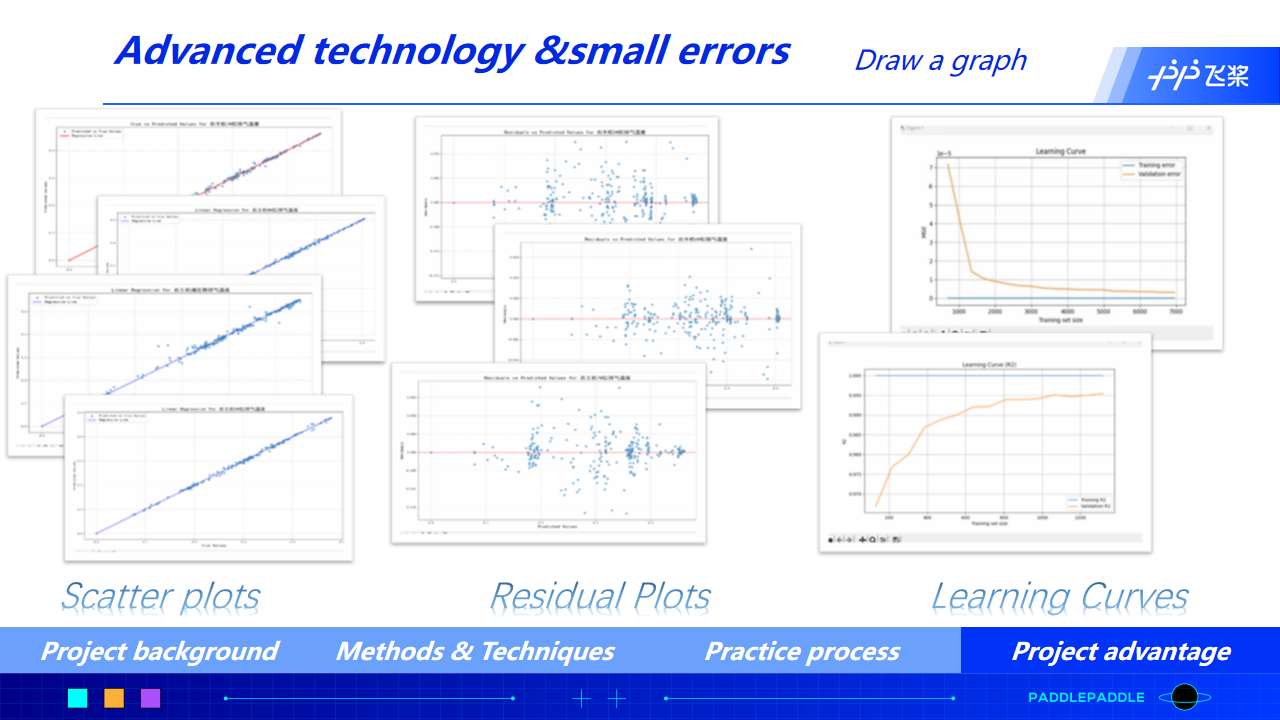
Prediction scatterplots, residuals and learning curves · Presentation, slide 14
Using machinery data such as main-engine freshwater pressure and temperature, the team examined regression predictions through charts.
Development process & more views +
Environment setup & team roles
The presentation described five stages: setup, model selection, tuning, cross-validation and plotting. Team members shared model work and presentation preparation.
Compare three models
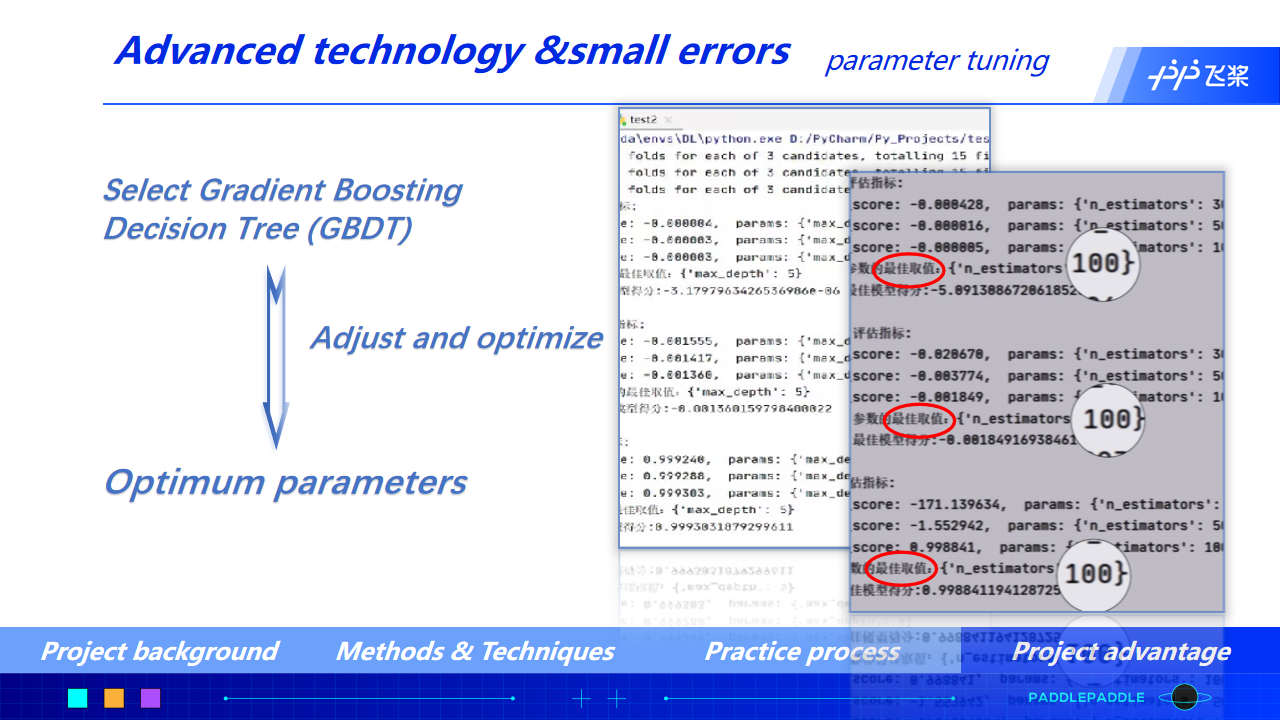
The team compared XGBoost, LightGBM and GBDT, choosing GBDT for further tuning and presentation.
Tune parameters & cross-validate
Parameter searches compared configurations, with model settings and cross-validation results recorded.
Split data & evaluate
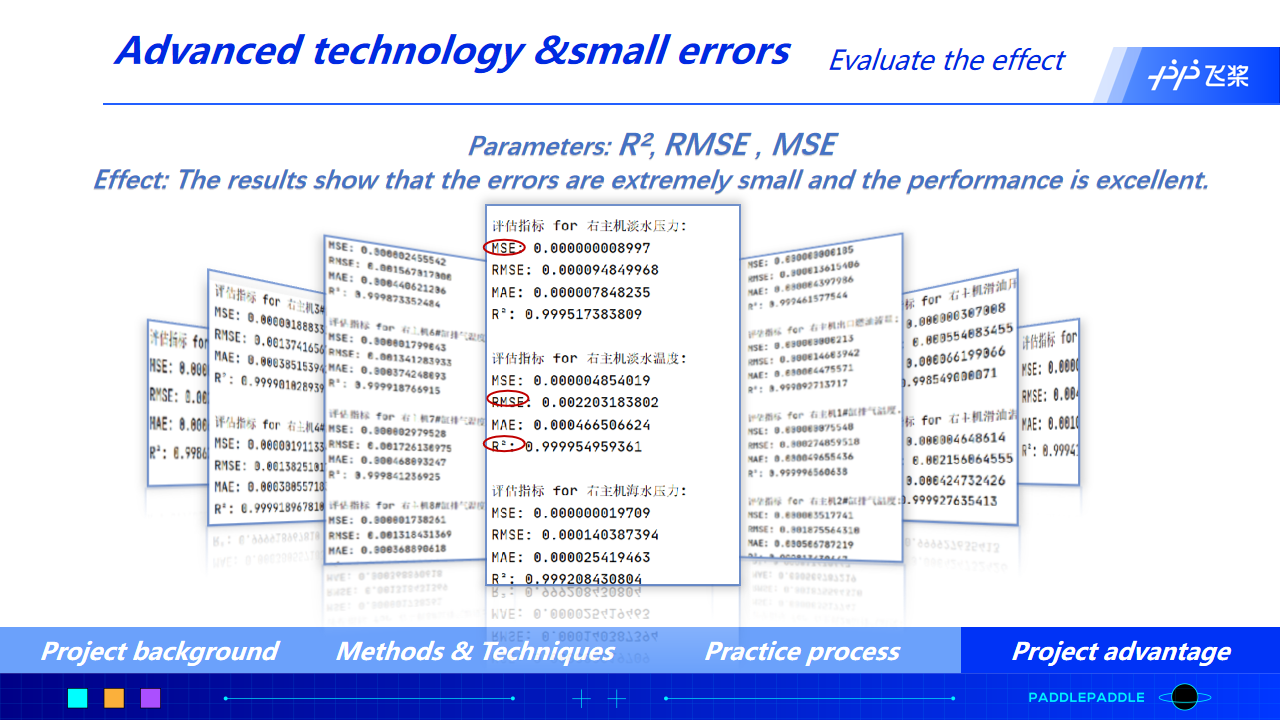
An 80% training and 20% test split was evaluated with R², MSE and RMSE, alongside scatterplots, residual plots and learning curves.
Evaluation of different prediction targets · Presentation, slide 12
Lessons learned & next steps
The project completed a full exercise in model comparison, tuning, evaluation and visualization, with equipment monitoring and fault prediction proposed as future applications.
Chart values are classroom experiment records from the final presentation, tied to the data and splits used then; they do not directly represent real-vessel prediction performance.
05
Computer vision · YOLOv11
Intelligent Ship Detection
A ship object-detection project using YOLOv11, forming the camp's computer vision work alongside vessel plate recognition.
These are educational prototypes developed during the camp. Workflows and charts retain the original final-presentation format and reflect that stage of development.
CAMP IN PRACTICE
Beyond the classroom, solve problems together.
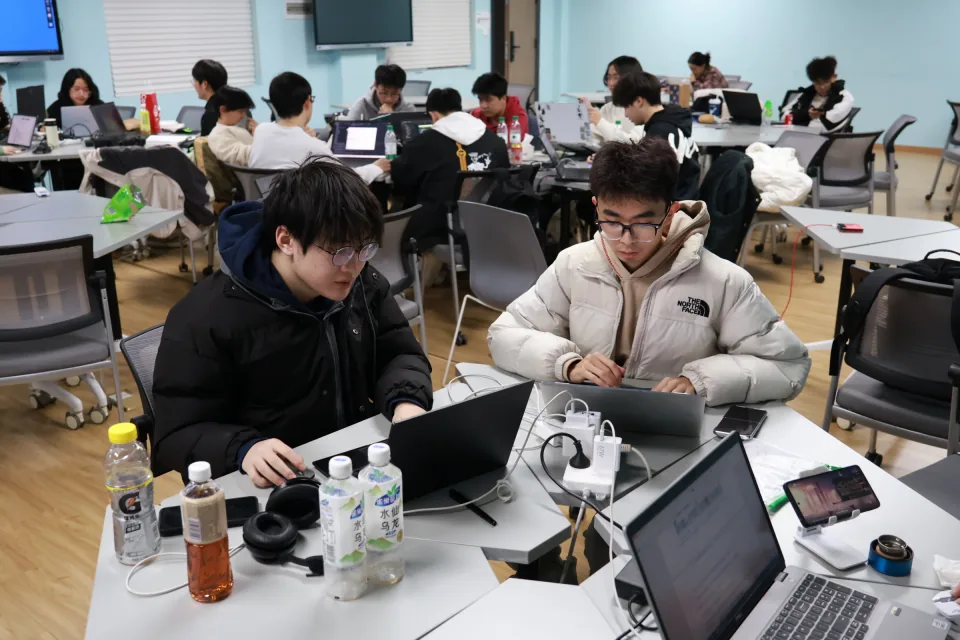
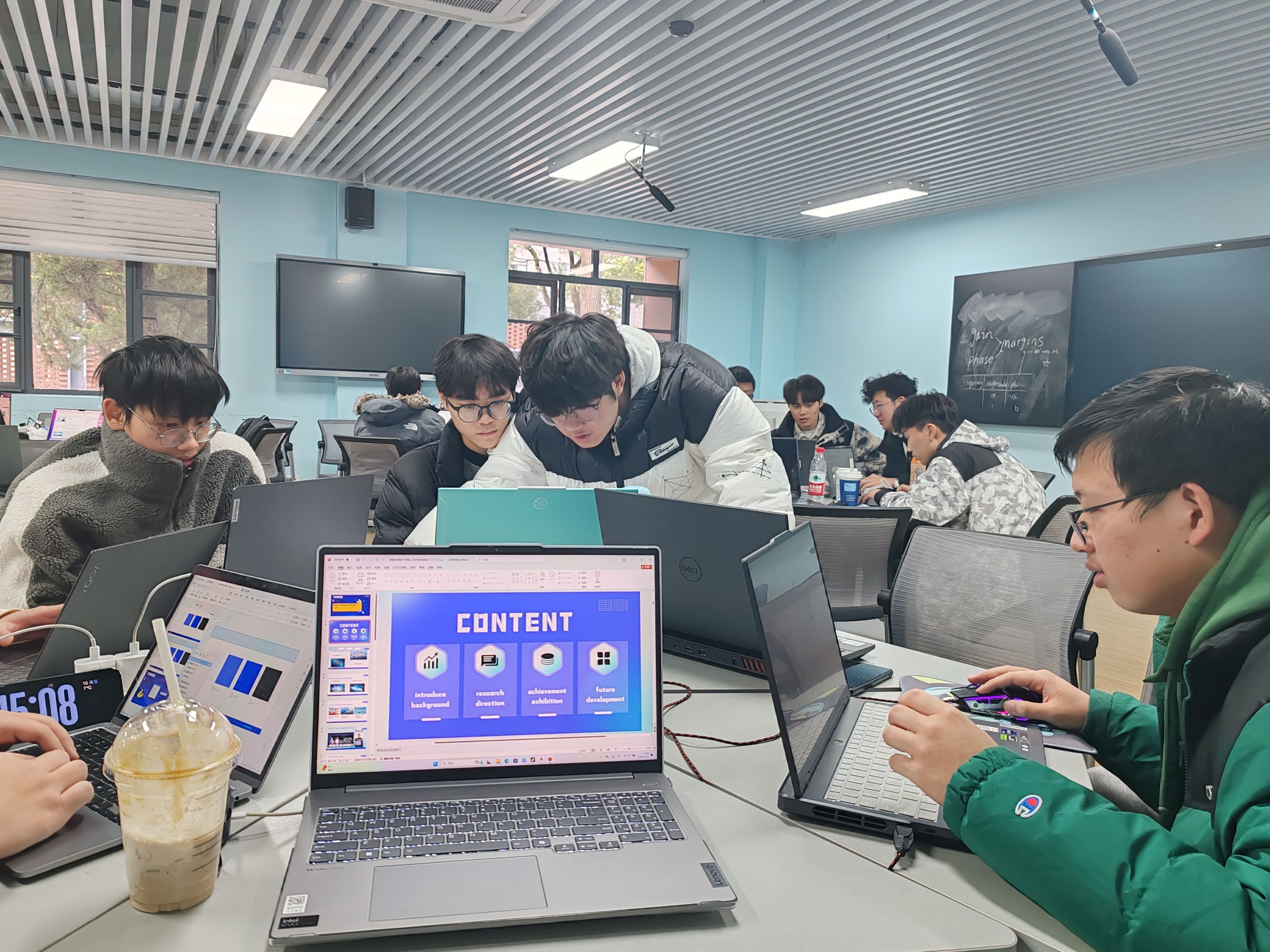
Group discussion, live debugging and presentation preparation ran throughout the camp. These photographs come from the project presentations.
Reports are in Chinese. Select a title to read the original.
Sources: PaddlePaddle Camp Final Presentation, Neptune Cup Script, Chief Mate Agent, Ship Intelligence Agent and IntelliData Pilots. The camp opened on January 7 and closed on January 14, 2025; see theuniversity opening report ↗andInstitute closing report ↗; class dates follow the final materials.